
Tariffs and shifting global supply chains can complicate material costs, lead times, and procurement plans. For an interior design project, those changes are not abstract: they can affect cabinetry hardware, stone, lighting, textiles, furnishings, and the sequence in which work can proceed.
At Ikorodu Interiors, we treat these pressures as a reason to plan earlier and source more imaginatively. Local fabrication, custom work, vintage pieces, and close relationships with makers can protect a project from some uncertainty while giving the finished home greater individuality. A constraint can become an invitation to look closer to home.
Turning Market Challenges into Design Opportunities
Good procurement has always required strategy. When imported products become more expensive or unpredictable, we reassess what is essential to the design, what can be secured early, and where a local or custom alternative may produce an even stronger result.
The objective is not to replace every international source. Global craft remains central to our point of view. It is to build enough flexibility into the specification that quality and character do not depend on a single vulnerable path.
The Power of Brooklyn Makers
Recent trade meetings offered a vivid reminder of the skill available in New York. I watched sofas being built in the traditional way—with frames and upholstery intended to last—and saw extraordinary woodworking taking place in Brooklyn workshops.
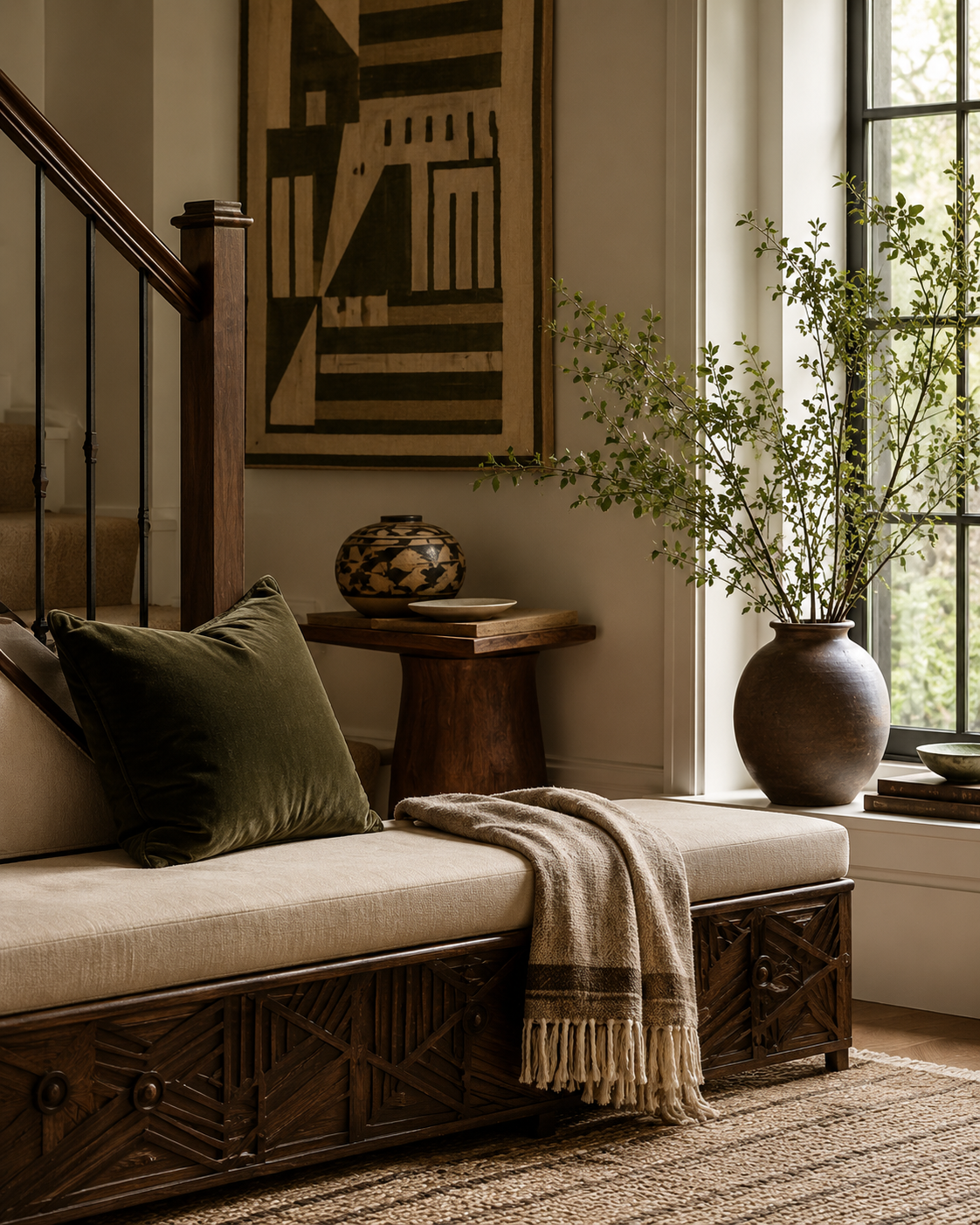
Working locally creates a different kind of access. Designers can review samples, study construction, refine proportions, and solve problems directly with the people making the piece. The result may be a sofa tailored to a specific body and room, millwork that resolves an awkward condition, or a table whose finish and dimensions could never come from a catalog.
Weekend Inspiration in the Hudson Valley
The Hudson Valley extends that creative landscape. Hand-thrown ceramics, bespoke furniture, hand-dyed textiles, metalwork, and sculptural objects are being made within a weekend’s reach of the city. Visiting a workshop reveals details a product image cannot: the hand of the maker, variation in a glaze, joinery, and the way a material changes in natural light.
These sourcing trips are both practical and inspiring. They help us identify pieces with a clear sense of place and find new applications for familiar materials. A useful object can also carry the story of how and where it was made.
Planning Ahead Protects the Project
For substantial renovations and fully furnished homes, important selections may need to be forecast many months—and sometimes close to a year—before installation. Early decisions make it possible to compare lead times, reserve production capacity, coordinate site readiness, and identify substitutions before they become emergencies.
That planning does not remove every surprise, but it creates options. Budgets can include realistic contingencies, custom makers can be involved before dimensions are fixed, and locally available materials can be evaluated for performance as well as appearance.
Craftsmanship Is a Lasting Form of Value
Markets fluctuate, but well-made objects continue to justify their place. A reupholsterable sofa, solid wood dining table, hand-tufted rug, or one-of-a-kind ceramic piece can serve a home for years while resisting the sameness of mass production.
Creative sourcing is ultimately about more than managing tariffs. It supports artisans, keeps specialized knowledge alive, and gives clients access to pieces with integrity, durability, and personal resonance. When the route changes, the design does not have to lose its ambition; sometimes it becomes more distinctive.