
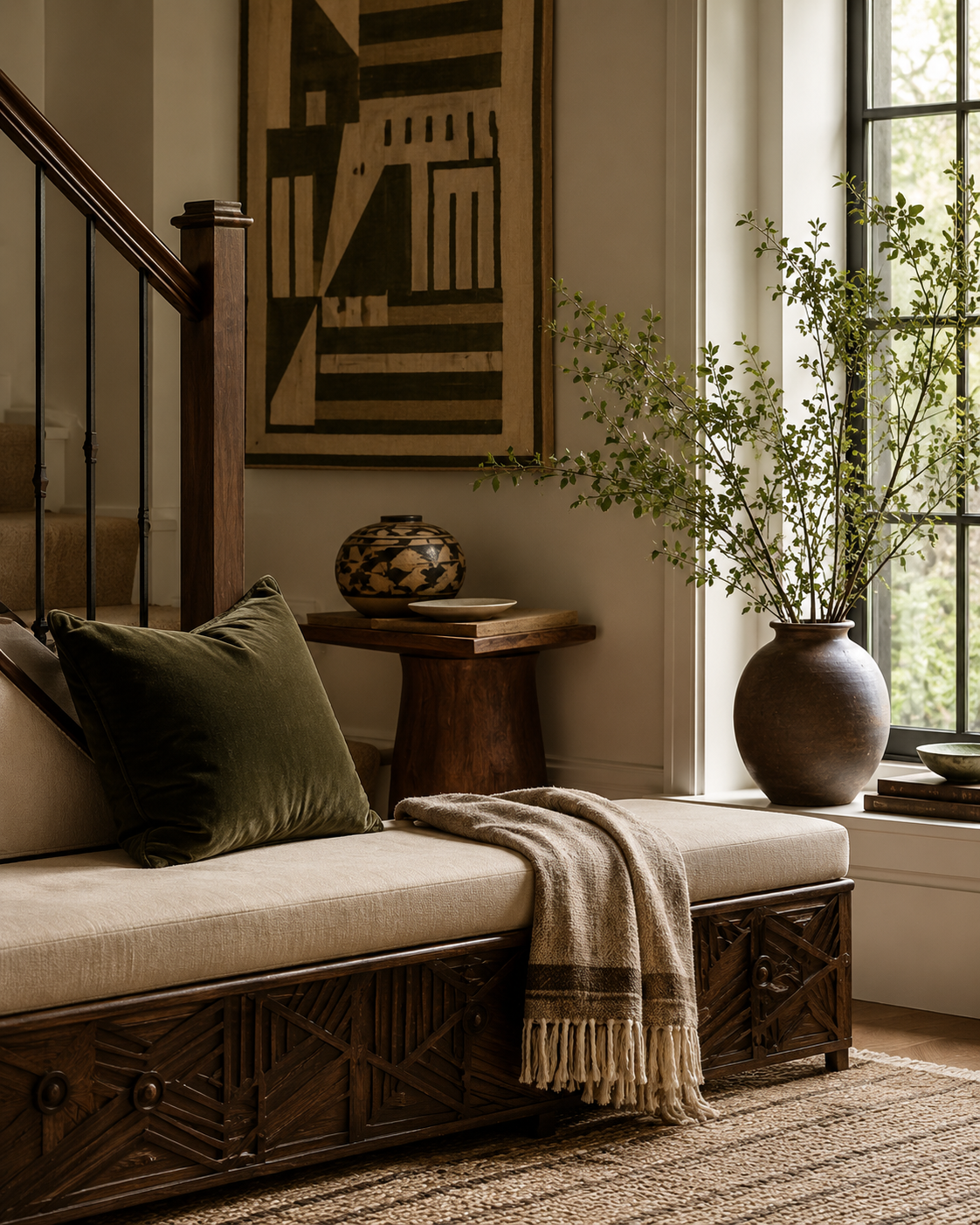
The difference between a room that is simply attractive and one that feels fully resolved is often found in the details. The seam that lands exactly where it should, the hardware finish that speaks to the cabinetry, the light that grazes a textured wall, and the alignment a guest may never consciously notice all contribute to the experience of a home.
At Ikorodu Interiors, this attention is not about perfection for its own sake or adding complexity everywhere. It is about making each decision intentional so the architecture, furnishings, materials, and daily functions feel connected.
A Childhood Love of Precision and Color
My sensitivity to detail began long before I worked in interiors. As a child, I carried a 96-count box of Crayola crayons to school because the exact shade mattered to me. I wanted every color to be chosen deliberately rather than settling for the closest available option.
When a teacher cracked open my brand-new crayons to use with easel paints, I was devastated enough that my mother replaced the box. The story is funny now, but the instinct has never left: subtle differences in hue, texture, placement, and finish can completely change how a composition feels.
Detail-Obsessed Design in Practice
Precision might mean matching a wallcovering pattern across an awkward corner, centering a chandelier on the furniture arrangement rather than an inherited junction box, or selecting a satin finish because matte would absorb too much light. It also means studying how materials look in morning sun, evening lamplight, and every condition between.
A room does not need more details; it needs the right ones. Repetition of a profile, finish, or color creates visual rhythm, while a deliberate point of contrast gives the eye somewhere to rest. The goal is cohesion without predictability.
The Hidden Details Matter Most
Some of the most consequential design work is nearly invisible once a project is complete. Closet interiors, outlet placement, clearances, drawer divisions, hardware heights, art spacing, and the meeting points between materials determine whether a home feels intuitive and orderly.
These decisions reward close coordination and careful documentation. A beautifully detailed room should not call attention to the effort behind it; it should simply feel calm, complete, and easy to inhabit.
Function and Beauty Must Resolve Together
Being detail-oriented means anticipating how the home will be used. A kitchen needs attractive surfaces, but it also needs landing space where it matters and storage matched to actual possessions. A bedroom needs harmony, but also intuitive lighting controls, accessible charging, and a place for clothing that otherwise collects on a chair.
When practical needs are integrated early, they do not interrupt the design. They strengthen it. Comfort, durability, circulation, maintenance, and visual character become parts of the same decision.
The Ikorodu Interiors Point of View
Our work is shaped by a belief that every inch deserves consideration, but not every inch needs ornament. We edit carefully, specify precisely, and select materials and objects for the contribution they make to the whole.
That discipline allows a home to feel personal rather than generic and refined rather than overworked. The smallest choices accumulate into an interior that is not only seen, but experienced.
Detail does not mean decoration everywhere. The strongest rooms often rely on fewer moves executed precisely: one consistent reveal, one repeated metal finish, and transitions resolved before installation begins.
Frequently Asked Questions
What details make an interior feel professionally designed?
Proportion, alignment, lighting placement, consistent hardware heights, thoughtful material transitions, and storage planned around real possessions all contribute to a resolved interior.
Can a room be too detailed?
Yes. Detail becomes visual noise when every surface competes. Precision and restraint allow important materials, art, and architectural moments to hold attention.