
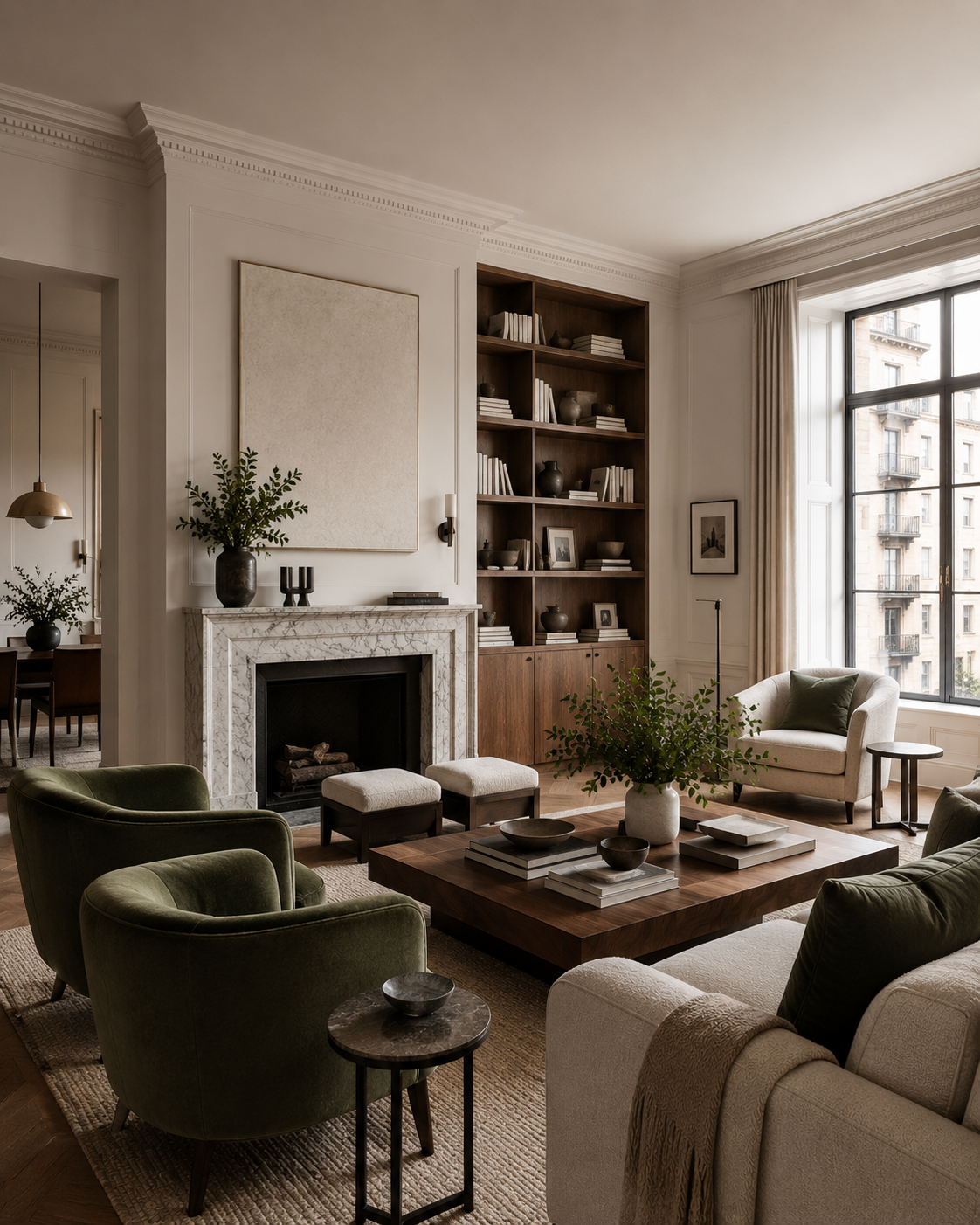
An elevated interior is not defined by a collection of expensive objects. It is shaped by the quality of its materials, the intelligence of its planning, the care evident in its details, and the way every element supports the people who live there. The most compelling rooms feel sophisticated without becoming precious and polished without losing warmth.
At Ikorodu Interiors, we think of luxury as an experience rather than a look: the ease of a layout that works beautifully, the tactile pleasure of natural materials, lighting that shifts with the day, and objects with history or personal meaning. These qualities create a home that feels considered, comfortable, and entirely individual.
Begin with Materials That Reward a Closer Look
Material quality establishes the character of a room before furniture or accessories are added. Natural stone, richly grained hardwood, hand-finished plaster, aged or polished metal, linen, wool, silk, and velvet each bring depth through color, texture, reflectivity, and touch. Their value is not simply that they are beautiful, but that they create a sensory experience and often become more expressive with time.
The strongest interiors rarely rely on one impressive finish. They build richness through contrast: veined marble against dark wood, crisp linen beside velvet, a handwoven textile softening tailored upholstery, or brushed brass warming a quiet plaster wall. A restrained palette can still feel abundant when its surfaces respond differently to light and touch.
Material selection should also be specific to the architecture and daily use. A beautiful finish that cannot withstand the demands of a kitchen, entry, or family room will not feel luxurious for long. Durability, maintenance, provenance, and craftsmanship matter as much as appearance.
Use Layered Lighting to Shape the Atmosphere
Lighting determines how every other design decision is experienced. It reveals texture, alters color, establishes focal points, and allows a room to move comfortably from morning routines to evening gatherings. One decorative fixture, however striking, cannot do all of that work alone.
A thoughtful plan combines ambient light for overall illumination, task lighting where focused visibility is needed, and accent lighting for artwork, cabinetry, architectural details, or sculptural objects. Bespoke chandeliers and expressive pendants can provide a memorable visual anchor, while discreet integrated lighting adds depth without demanding attention.
Dimmers, fixture height, bulb temperature, natural light, and the position of each source should be resolved together. When lighting is layered and controlled, the atmosphere can change without changing the room itself.
Let Custom Details Solve Real Problems
Custom work is most successful when beauty and function are inseparable. Made-to-measure cabinetry can turn an awkward wall into meaningful storage. A built-in banquette can create a gathering place where standard furniture would not fit. A precisely scaled table, headboard, rug, or vanity can strengthen the room’s proportions while responding to a client’s routines.
The refinement often lives in quieter decisions: aligned reveals, thoughtfully placed outlets, hardware that feels substantial in the hand, upholstery tailored to the millimeter, and transitions between materials that appear effortless. These details may not announce themselves immediately, but together they give an interior clarity and coherence.
Bespoke does not need to mean ornamental or excessive. The point is specificity—designing an element for this architecture, this function, and these inhabitants rather than treating customization as an end in itself.
Curate Art and Objects with Meaning
A beautifully finished room can still feel anonymous if it says nothing about the people who live there. Art, books, family pieces, travel finds, and handcrafted objects bring memory, culture, curiosity, and identity into the composition. They transform refinement from a visual exercise into a personal story.
At Ikorodu Interiors, we curate and source distinctive materials, Nigerian and West African art, handcrafted objects, rich woods, and sculptural forms that add history and cultural depth. Chosen in conversation with the architecture and the client’s own story, these pieces help a home feel connected rather than simply decorated.
Curation also requires editing. A meaningful object deserves space to be seen, and an expressive artwork should be supported by the scale, lighting, and furniture around it. Fewer, better-placed pieces often create more presence than a room filled indiscriminately.
Balance Visual Impact with Everyday Comfort
Opulence without livability quickly loses its appeal. An elevated home should welcome conversation, rest, work, entertaining, and the ordinary rhythms of the day. Comfortable seating, intuitive circulation, accessible storage, resilient textiles, and furniture scaled to both the room and the body are fundamental design decisions—not practical compromises made after the aesthetic work is complete.
This balance is especially important in homes where rooms serve more than one purpose. Flexible layouts, concealed storage, layered lighting, and carefully defined zones allow a space to adapt while remaining visually composed. The result can feel generous and calm even when square footage is limited.
True refinement is often experienced as ease. Doors open without obstruction, a reading chair has light where it is needed, daily items have a logical home, and guests naturally understand how to move through the space. When function has been considered this carefully, comfort becomes part of the beauty.
Create a Home That Feels Timeless—and Unmistakably Yours
Timeless design is not the absence of personality, nor does it require a neutral room stripped of distinctive ideas. It comes from strong proportions, honest materials, enduring craftsmanship, and a point of view rooted in the people who live there rather than in a passing formula.
A home can hold sculptural furniture, saturated color, expressive pattern, collected art, and cultural references while still feeling harmonious. Cohesion comes from intentional relationships between scale, palette, material, light, and negative space—not from making every room look the same.
The art of an elevated interior lies in bringing all of these ideas together: materials with integrity, lighting with range, custom details with purpose, objects with meaning, and comfort that is never treated as secondary. The result is more than a polished room. It is a home that feels layered, effortless, and deeply personal.