
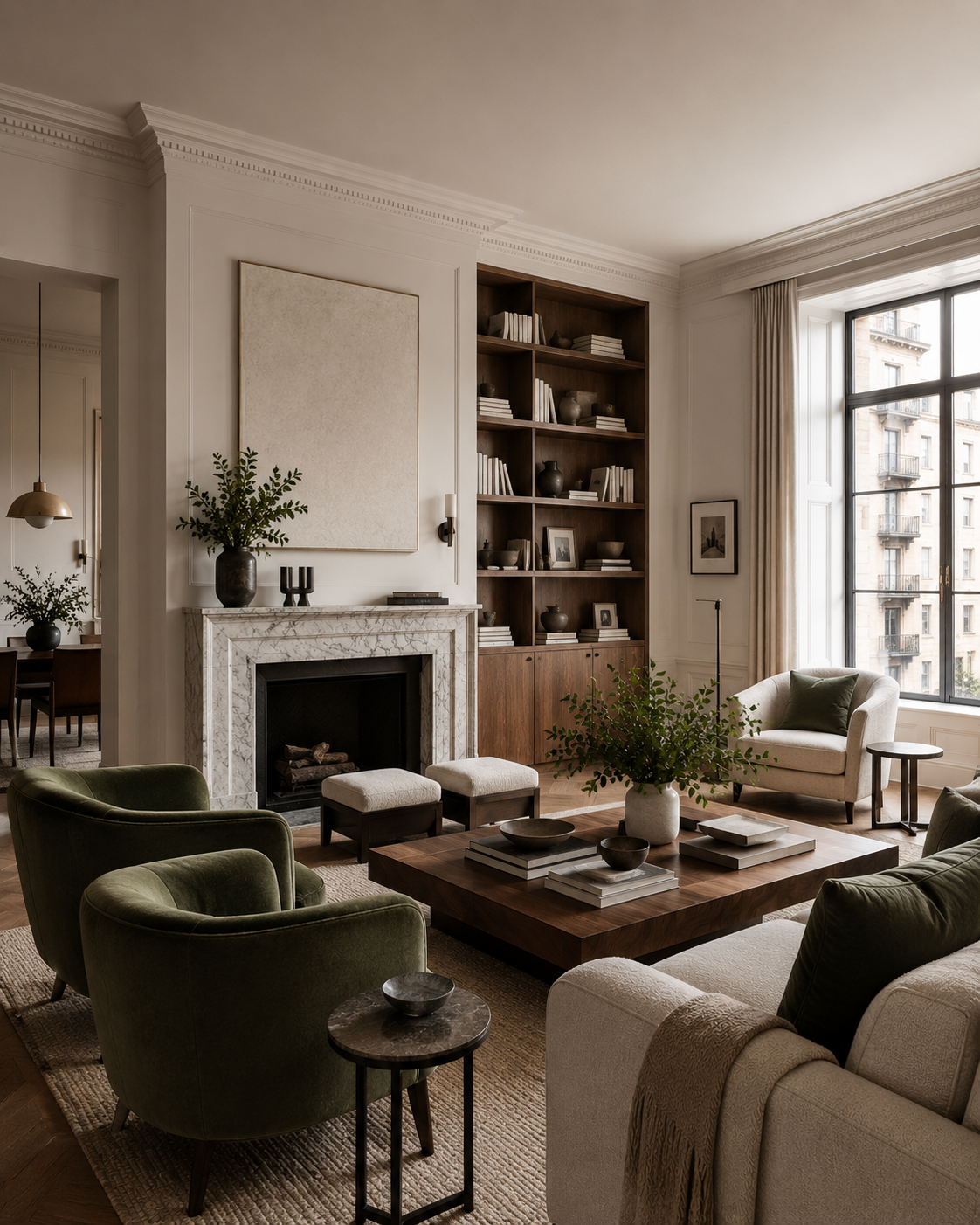
I have to admit that I do not love “do this, not that” design articles. A home is deeply personal, and anyone should feel free to use the colors, furniture, art, and objects that make them happy. Good design is not a single approved look, and individuality matters far more than following a rigid list of rules.
That said, there are a few recurring design challenges that are genuinely difficult to make work well. They are less about taste than about how a room functions and feels: whether the lighting supports daily life, whether people can move comfortably through the space, whether the furnishings relate to one another, and whether the finished home says something meaningful about the people who live there.
With that distinction in mind, these are four common interior design mistakes to avoid—or, more accurately, four elements worth approaching with particular care.
1. Relying on a Single Source of Light
Even a beautifully furnished room can lose its impact when the lighting is flat, harsh, or incomplete. One overhead fixture rarely provides enough flexibility for everything a space needs to do, particularly in living rooms, kitchens, bedrooms, and other areas that shift between practical tasks and relaxation.
A layered lighting plan combines ambient light for overall illumination, task lighting for activities such as reading or food preparation, and accent lighting that draws attention to art, millwork, texture, or architecture. Natural light should also be considered throughout the day, along with bulb temperature, fixture height, dimming, and the way light reflects from surrounding finishes.
The goal is not to add fixtures everywhere. It is to create several controlled sources at different heights so the room can change with the time of day and the way it is being used.
2. Allowing Too Many Pieces to Compete
More furniture and décor do not automatically make a room feel more complete. When every wall, surface, and corner is occupied, the eye has nowhere to rest and circulation can become awkward. Even individually beautiful pieces can lose their presence when they are crowded together.
Editing does not require a minimalist home. Layered interiors can hold color, pattern, books, art, and collected objects while still feeling calm. The difference is hierarchy: deciding what should lead, what should support it, and where negative space will allow the most meaningful elements to register.
Before adding another piece, consider what function it serves, how it affects movement, and whether it strengthens the room’s larger composition. Thoughtful restraint often makes a space feel more generous and allows craftsmanship and material quality to be appreciated.
3. Ignoring Scale and Proportion
Scale is one of the most consequential—and least obvious—parts of interior design. A sofa that overwhelms a modest living room can make the entire space feel smaller, while undersized furniture in a large room may appear disconnected and leave the layout without a clear center of gravity.
Successful proportion begins with measurements, but it also depends on relationships. Consider the height of a headboard against the wall, the width of a rug beneath a seating group, the visual weight of a light fixture above a table, and the amount of open space around each piece. Furniture should relate to the architecture, to the people using it, and to the other elements in the room.
This does not mean everything must be conventionally sized. An intentionally oversized artwork or sculptural fixture can be memorable because the contrast is deliberate. The challenge is ensuring that the choice feels purposeful rather than accidental.
4. Creating a Beautiful Room That Could Belong to Anyone
A polished interior can still feel generic when it relies entirely on familiar showroom combinations or a single recognizable trend. Personalization gives a home emotional depth and prevents refinement from becoming impersonality.
Family heirlooms, commissioned or collected art, travel finds, books, photographs, custom furnishings, and objects connected to heritage or memory can all shape a more individual point of view. At Ikorodu Interiors, we curate and source distinctive materials, Nigerian and West African art, handcrafted objects, rich woods, and sculptural forms in conversation with both the architecture and the client’s story.
Personal pieces do not need to fill every surface. A smaller number of meaningful elements, thoughtfully placed and given room to breathe, often communicates more than an abundance of generic accessories. The aim is a home that feels coherent and considered, but also unmistakably lived in.
Design Guidance, Not Design Rules
These are not reasons to avoid a favorite object, unconventional layout, dramatic light fixture, or maximalist collection. Interior design becomes interesting when people take risks and express themselves. The question is whether each choice supports the room’s function, proportions, atmosphere, and larger story.
The most successful homes balance beauty with comfort and individuality with cohesion. When lighting is layered, circulation is protected, scale is intentional, and personal meaning is allowed to lead, a home feels refined without feeling prescribed—and entirely its own.