
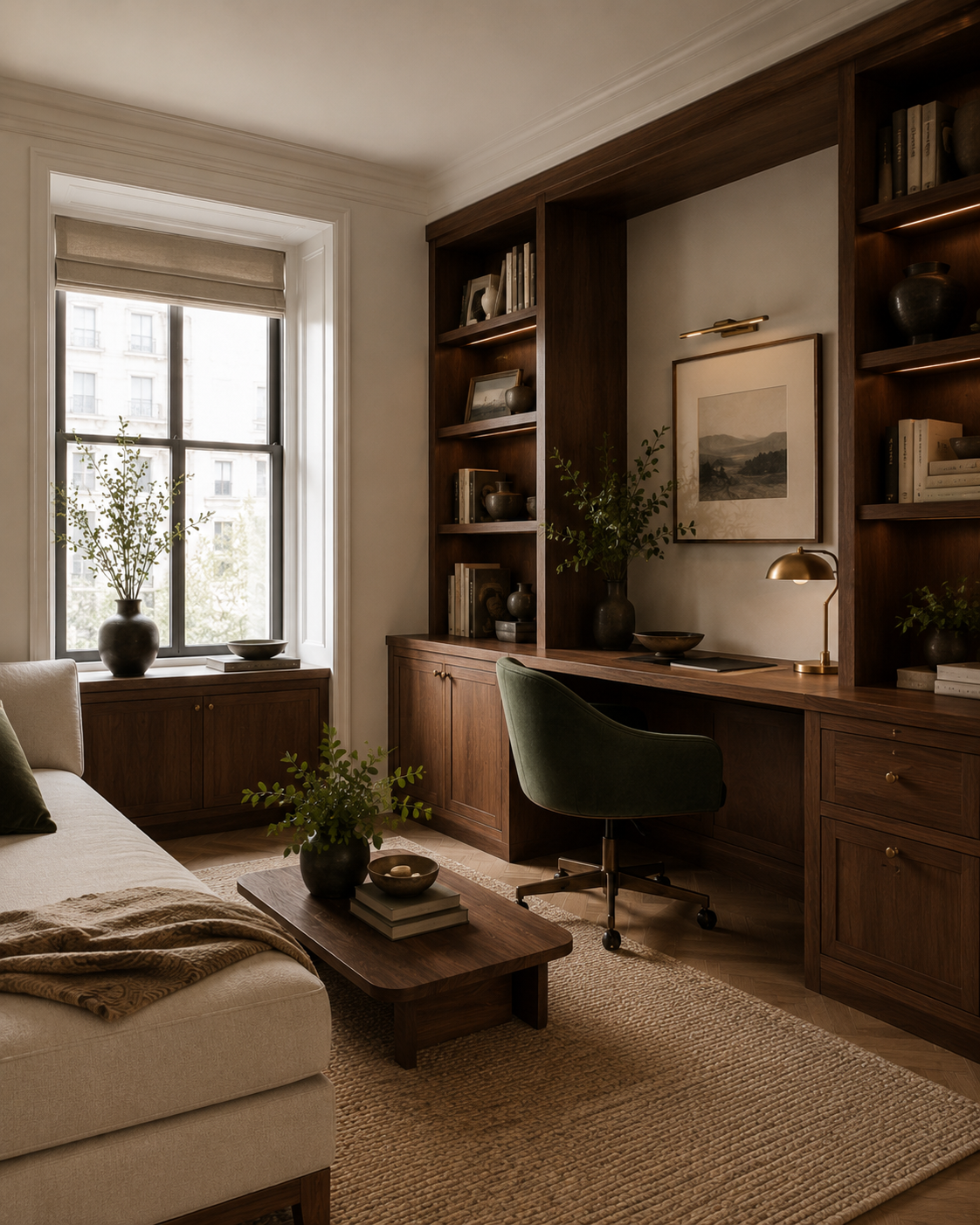
Minimalism is often mistaken for stark white rooms, hard surfaces, and an absence of personality. At its best, however, modern minimalism is less about owning as little as possible and more about creating visual clarity. Every element has room to register, daily life feels easier to manage, and the objects that remain carry greater meaning.
Warmth comes from what is chosen: tactile materials, flattering light, comfortable proportions, and evidence of the people who live there. A home can feel edited without feeling empty, and clean-lined without becoming cold. The key is to treat comfort as part of the design rather than something layered on at the end.
Edit Thoughtfully Without Removing Personality
Begin by identifying what supports the room’s function and what adds genuine beauty or meaning. Decluttering should improve circulation, storage, and visual rhythm—not strip away books, art, heirlooms, or the signs of everyday life.
Closed storage can quiet necessary household items, while open surfaces can hold a smaller selection of pieces with intention. Leaving negative space around art and objects gives them presence and keeps the room calm without making it anonymous.
Layer Natural Textures for Depth
Wood, linen, wool, leather, plaster, ceramics, and woven fibers introduce warmth through grain, weave, and subtle variation. Pairing matte and softly reflective finishes keeps a restrained palette from appearing flat. A nubby rug beneath a streamlined table or linen drapery beside smooth millwork can create richness without visual noise.
Variation matters more than quantity. Repeating a few related materials throughout the room produces cohesion, while contrast between tailored and organic surfaces makes the interior feel considered and tactile.
Use Lighting to Create Atmosphere
A single bright ceiling fixture can make even a beautifully furnished room feel clinical. Combine ambient, task, and accent lighting at different heights: a shaded floor lamp beside a reading chair, table lamps that create pools of light, and discreet illumination for art or architecture.
Choose warm color temperatures for living spaces and install dimmers wherever possible. Natural daylight should also be shaped rather than blocked; sheer or textured window treatments soften glare and allow the room to change gracefully from morning to evening.
Let One or Two Statement Pieces Lead
Minimal rooms benefit from a clear focal point. A sculptural chair, expressive artwork, distinctive coffee table, or handcrafted light can give the space identity while quieter elements support it.
A statement piece should earn its attention through form, material, craftsmanship, or personal meaning—not simply size. When the surrounding composition is restrained, a single exceptional object can make the entire room feel richer and more individual.