
I was delighted to be featured as an industry expert in Redfin’s April 17, 2025 article, “Design Through the Decades: The Top Interior Trends from the 2010s Onward.” Written by Holly Hooper, the feature brings together design professionals to consider which ideas from the 2010s continue to influence the way we live today.
The article explores an era defined by a graceful blend of old and new. Reclaimed wood, exposed beams, vintage furniture, and enduring craftsmanship began sharing space with cleaner architectural lines, integrated technology, and more adaptable ways of living. At their best, these interiors demonstrated that sustainability, comfort, history, and innovation can coexist in a home that feels curated but approachable.
For Ikorodu Interiors, two of the decade’s most recognizable ideas remain especially relevant: open-concept living and bright white interiors. Neither has to feel generic or tied to a particular moment. When approached with intention, both can create adaptable foundations for homes that are layered, personal, and responsive to everyday life.
Open-Concept Living: Designing for Flexibility and Flow
Open-concept living truly came into its own during the 2010s, and for good reason: it celebrates fluidity and adaptability. While it is lovely to have a dedicated room for every function, many homes need individual spaces to do double duty. A kitchen may also be a gathering place; a living room may need to accommodate entertaining, quiet reading, and work; and a dining area may serve as both a formal setting and an everyday family hub.
The strength of an open layout lies in its ability to support these overlapping needs without making the home feel fragmented. Intentional furniture placement can establish conversation areas and preserve circulation. Rugs can anchor distinct zones. Lighting can differentiate task, dining, and relaxation areas, while color and material changes can signal subtle transitions within one cohesive composition.
Open-concept living can also create uninterrupted sight lines that invite the outdoors in. When windows, terraces, gardens, or a compelling view remain visible across the interior, the boundary between inside and outside begins to soften. The result is a more expansive and seamless living experience—one that feels generous even when the square footage is limited.
The key is not simply removing walls. Successful open-plan interior design requires structure, proportion, storage, and visual rhythm. Each zone should have a clear purpose while remaining connected to the architecture and the rooms around it.
Bright White Interiors: A Versatile Foundation
Bright white interiors act as a remarkably effective blank canvas: serene, adaptable, and capable of supporting many different design directions. A considered white backdrop gives visual breathing room to elements that might otherwise compete for attention, allowing rich textures, sculptural furniture, expressive art, pattern, and color to feel deliberate rather than crowded.
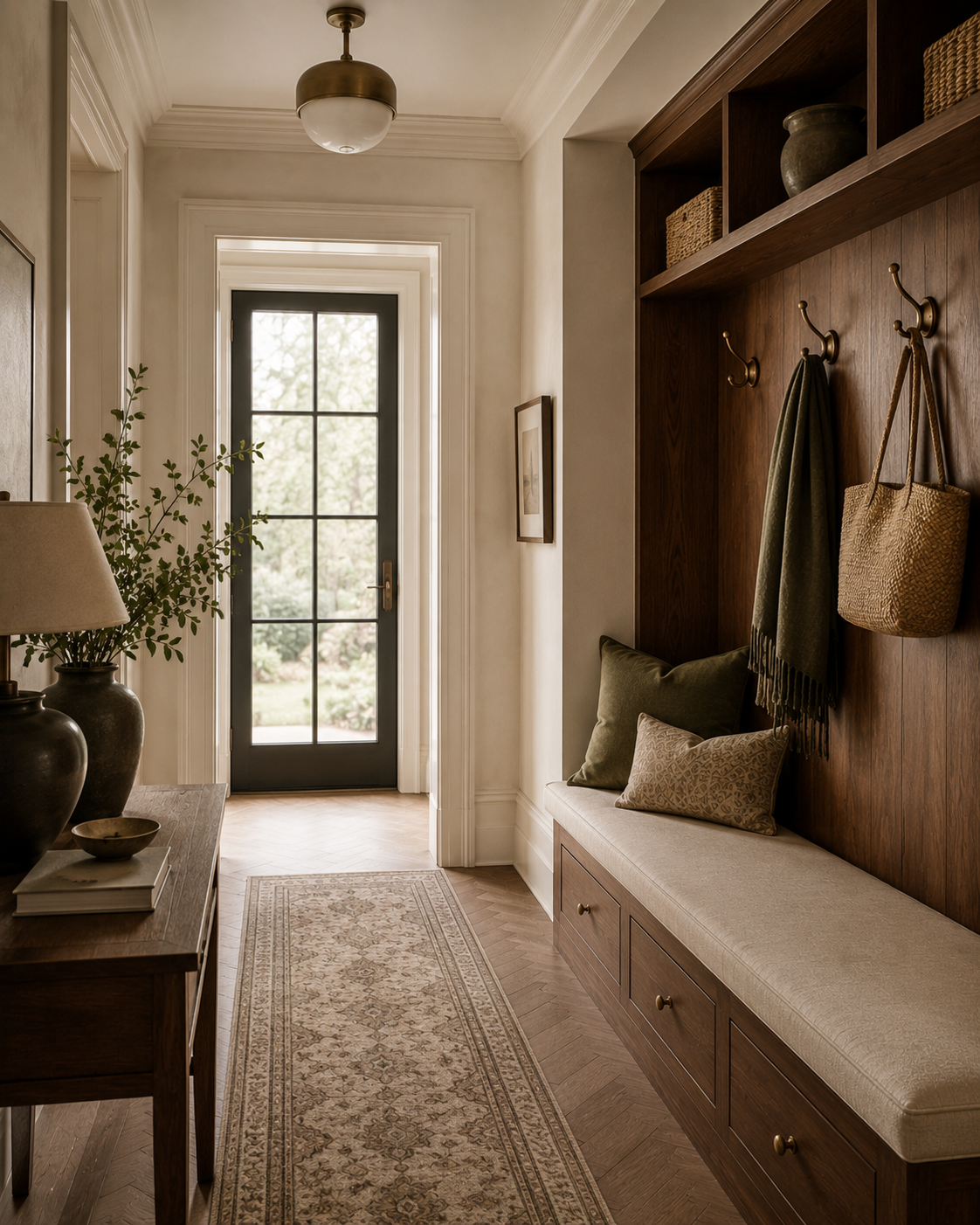
White is not the absence of design. Undertone, natural light, finish, and contrast all affect how it behaves. A warmer white can soften dark wood and aged brass, while a clearer white can sharpen architectural lines and amplify daylight. Layering linen, plaster, wool, stone, timber, and handcrafted objects prevents a pale room from feeling flat or impersonal.
This adaptability also allows a home’s story to evolve. Art can change, collected pieces can be added over time, and new colors can enter without requiring every permanent finish to be reconsidered. White gives meaningful objects room to hold attention while helping the composition remain calm.
From a resale perspective, bright white is also one of the least objectionable foundations. Its neutrality appeals broadly, helps prospective buyers imagine their own furnishings in the space, and offers enough flexibility for a future homeowner to build an entirely different point of view.
Blending Vintage Character with Modern Living
The most enduring lesson of 2010s interior design is not a single color or floor plan, but the confidence to combine periods and ideas. A reclaimed wood beam can bring warmth to a streamlined room. Vintage furniture can sit comfortably beside contemporary lighting. Smart-home technology can improve daily life without becoming the visual focus of the space.
This balance keeps a home from feeling frozen in one era. Natural materials, patina, and collected pieces add depth and history, while clean lines and thoughtful technology support how people live now. The result is an interior that honors the past without sacrificing comfort, function, or a clear point of view.
Why These 2010s Interior Design Trends Still Matter
Open layouts and bright white walls became ubiquitous during the 2010s, but ubiquity does not make them inherently impersonal. Their lasting value comes from versatility. One offers spatial flexibility; the other offers visual flexibility. Together, they can form a quiet framework for a home shaped by texture, art, color, craftsmanship, and the people who live there.
At Ikorodu Interiors, we treat these elements as a starting point rather than a finished aesthetic. We pair adaptable foundations with expressive materials, rich woods, sculptural forms, distinctive art, and handcrafted objects selected in conversation with the architecture and the client’s story. The goal is a home that feels lived-in, layered, and connected—not simply decorated.
Being included in Holly Hooper’s discussion alongside other design professionals reinforces what we have always believed: the most enduring interiors balance tradition with innovation. Great design leaves room for individuality, embraces elements with lasting value, and integrates modern conveniences without sacrificing warmth or character.