
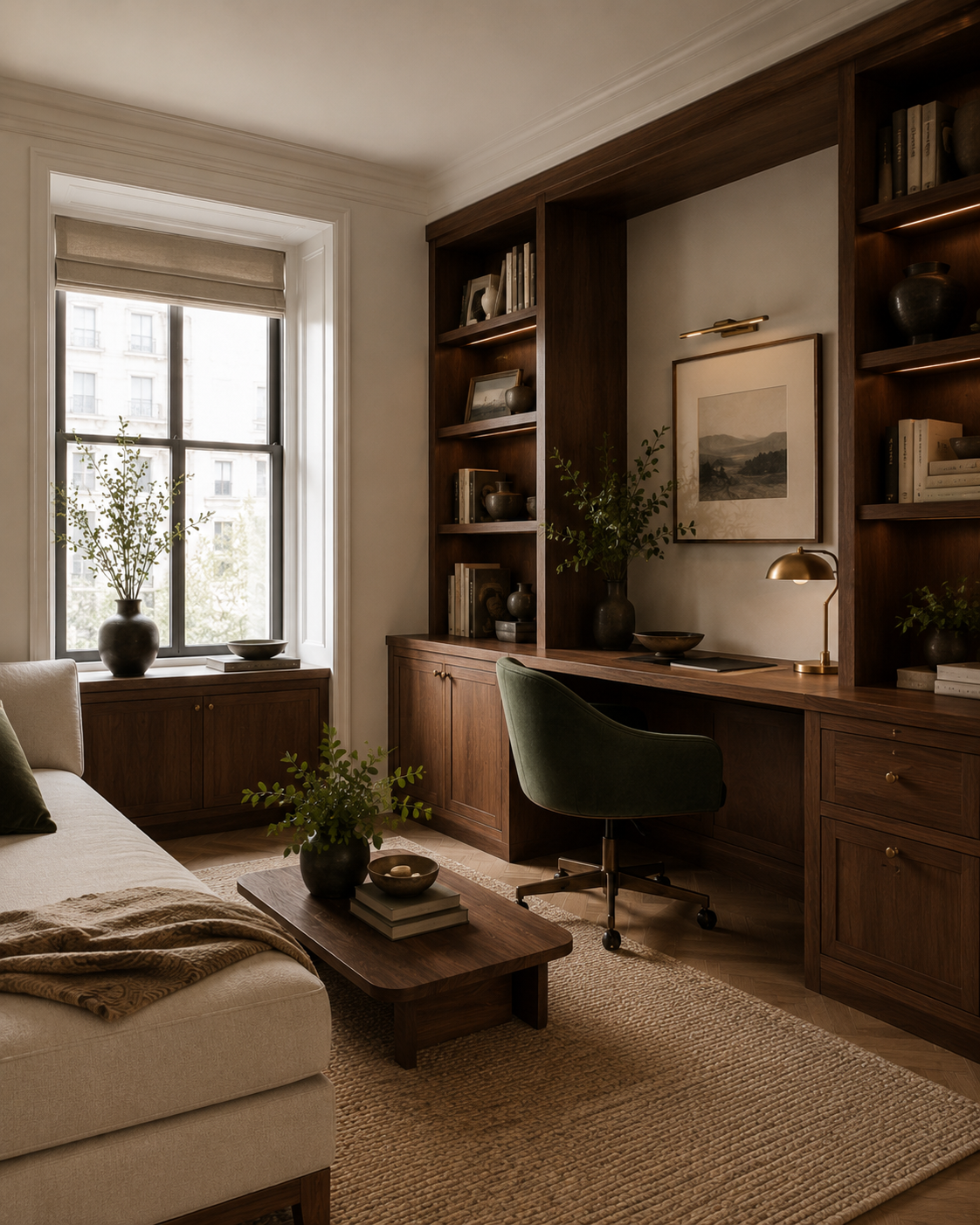
A New York City studio asks one room to perform the work of an entire home. Sleeping, entertaining, working, dining, dressing, and storage may all share a compact footprint, so every decision carries unusual weight. The challenge is not simply fitting more into less; it is creating a clear, comfortable sequence that allows daily life to change without the apartment feeling crowded.
Smaller square footage can also create an opportunity. With fewer surfaces and rooms to address, the budget can be concentrated on the millwork, hardware, lighting, and materials that have the greatest impact. Precision becomes a form of spaciousness: when everything has a place and every element earns its footprint, the studio feels calmer and more generous.
Begin with the Activities, Not the Furniture
Before selecting a sofa or bed, define what the apartment must support. Does the resident work from home every day, entertain regularly, need an extensive wardrobe, or prefer a full dining table to a kitchen counter? Ranking those needs prevents the floor plan from becoming a collection of default furniture pieces.
Zones can be established through rugs, lighting, ceiling treatments, shelving, or furniture placement instead of permanent partitions. Preserving long sight lines and clear circulation allows each zone to feel distinct while the studio remains visually open.
The Art of the Intentional Closet
In a compact apartment, a generic closet is a lost opportunity. The most intricate closet I have imagined was planned down to the category: long and short hanging, folded clothing, shoes, handbags, jewelry, luggage, laundry, and the small accessories that otherwise migrate to visible surfaces.
Adjustable shelves, drawers of varied depths, pull-out accessories, integrated lighting, and doors that use the room efficiently allow the closet to function like a beautifully organized cabinet. The design should begin with an inventory of what the client owns, not a standard internal package.
Statement Doors with Architectural Purpose
Doors occupy valuable visual territory and can do more than close an opening. Fluted glass, elegant French doors, paneled pocket doors, and precisely detailed millwork can borrow light, define a sleeping area, or conceal storage while adding architectural character.
The right mechanism matters as much as appearance. Pocket and sliding doors preserve swing clearance; translucent glazing shares daylight without surrendering all privacy; and coordinated hardware keeps a small field of view composed.
Premium Finishes Where They Matter Most
A limited footprint can make high-quality materials more attainable because fewer square feet are required. A distinctive stone remnant, richly finished wood veneer, handmade tile, solid hardware, or a carefully crafted built-in can give the entire apartment depth.
Restraint keeps these materials from competing. Repeating a concise palette across the kitchen, storage, and living zones creates continuity, while one or two expressive moments provide identity. Integrated appliances and flush cabinetry help necessary functions recede into the architecture.
A Studio Should Still Feel Like a Home
Space-saving design should not result in an apartment that feels mechanical. Comfortable upholstery, meaningful art, layered lighting, full-length curtains, and tactile rugs bring softness and personality. Multipurpose pieces should be attractive and easy to use in every configuration, not compromises that remain folded away.
The best NYC studio apartment design balances storage, flexibility, comfort, and character. When the plan responds precisely to the person who lives there, a single room can support a remarkably full life.
The floor plan should begin with the resident’s most demanding daily needs—not a standard list of studio furniture. A serious wardrobe, frequent overnight guests, or full-time work can each change the right solution.
Frequently Asked Questions
How do you divide a studio apartment without making it feel smaller?
Use rugs, lighting, furniture placement, open shelving, translucent glazing, or pocket doors to define zones while preserving long sight lines and borrowed light.
What storage has the greatest impact in a NYC studio?
Full-height, category-specific storage usually provides the greatest gain. Plan hanging, drawers, shoes, luggage, laundry, work supplies, and household items before designing the closet interior.