
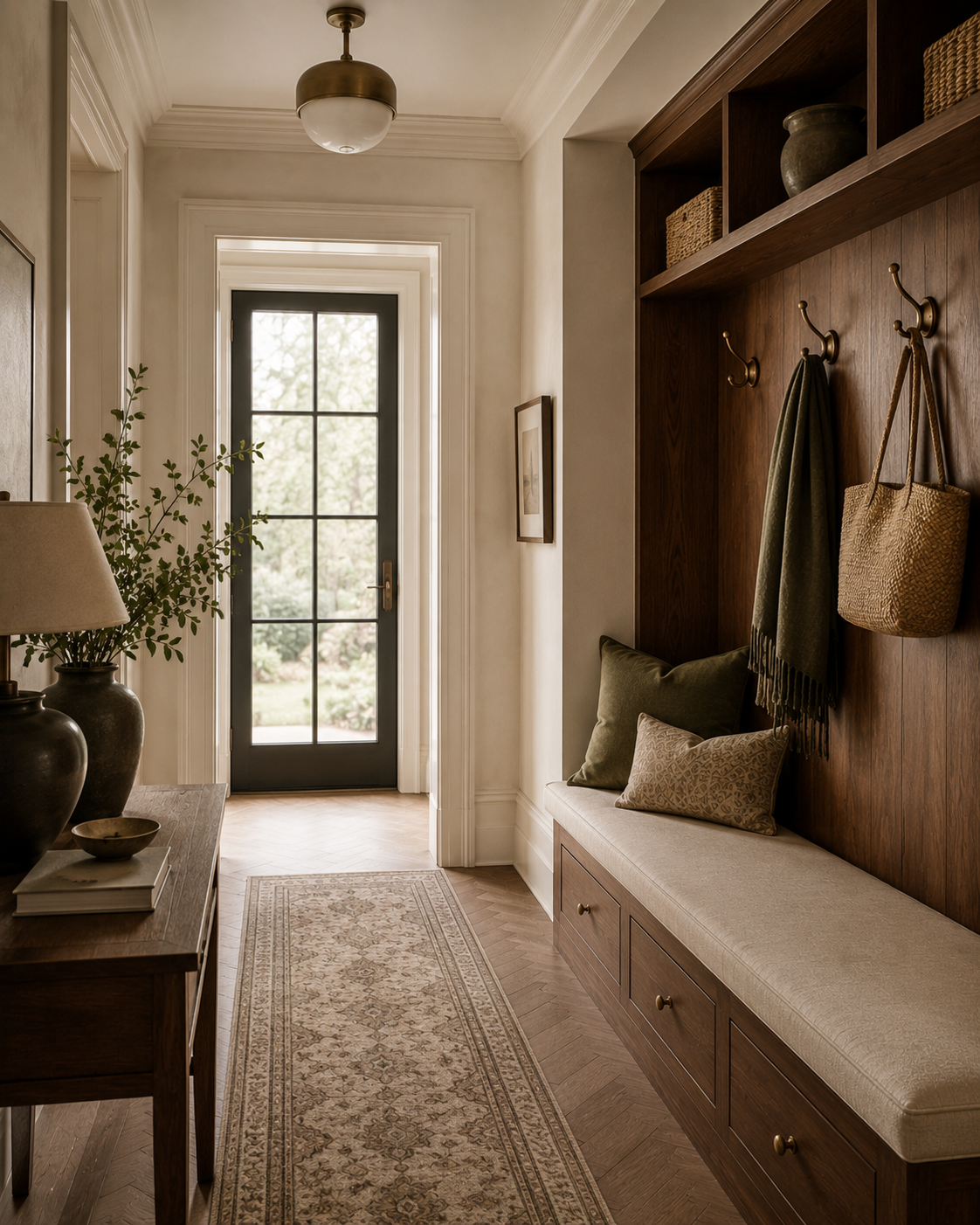
A beautifully designed home should reveal something about the people who live there. The most memorable interiors are not defined by a recognizable formula or a collection of expensive objects. They are shaped by personal history, daily rituals, cultural connections, and the pieces a client genuinely loves.
Personalized interior design brings those influences into conversation with the architecture. Family heirlooms, travel finds, commissioned art, custom furniture, and a distinctive palette can give a room identity without sacrificing cohesion. The goal is not simply to decorate a space, but to create a home that feels collected over time, supports everyday life, and could belong to no one else.
Begin with the Story You Want Your Home to Tell
Personalization begins with listening. Before selecting furniture or finishes, consider the experiences, relationships, places, and traditions you want the home to hold. A beloved painting may establish the palette for an entire room. A family dining table may influence the layout. An object brought home from a meaningful trip may inspire a material, shape, or color that appears elsewhere in the design.
These references do not need to be literal or displayed all at once. Their value lies in giving the interior an authentic point of departure. When each decision connects to a larger story, the result feels intentional rather than assembled.
Incorporate Meaningful Art and Collected Objects
Art and personal objects introduce character that cannot be replicated through trend-led decorating. Original work, family photographs, books, textiles, ceramics, and inherited pieces can add emotional depth while connecting a home to its inhabitants’ heritage, travels, interests, and memories.
At Ikorodu Interiors, we curate and source distinctive materials, Nigerian and West African art, handcrafted objects, rich woods, and sculptural forms. Each selection is considered in relation to the architecture and the client’s story, helping the home feel connected rather than simply decorated.
Editing is essential. Giving important pieces room to breathe often creates more impact than filling every surface. A single artwork in the right location or a thoughtfully composed group of objects can establish a powerful focal point without overwhelming the room.
Use Custom Furniture and Bespoke Details with Purpose
Custom design is most valuable when it answers a specific need. A made-to-measure banquette can transform an overlooked corner into a gathering place. Built-in cabinetry can improve storage while reinforcing the room’s proportions. A custom headboard, rug, or dining table can introduce a distinctive scale and material language unavailable through standard retail options.
Bespoke wall treatments, millwork, hardware, and upholstery offer another layer of individuality. The strongest choices are not custom merely for the sake of exclusivity; they improve function, respond to the architecture, or translate a personal reference into something enduring.
Develop a Signature Color and Material Palette
Color is one of the clearest ways to make a home recognizable as your own. A signature palette might grow from a favorite artwork, a landscape, a cultural reference, or simply the colors that make you feel most at ease. Repeating those tones in varied strengths across paint, textiles, stone, and accessories creates continuity without making every room identical.
Materials deepen that story. Rich wood, aged brass, natural stone, linen, velvet, plaster, and woven fibers each bring a different temperature and texture. Combining smooth and tactile surfaces, matte and reflective finishes, or contemporary forms with pieces that show patina creates a layered interior with both clarity and depth.
Layer Personality Without Losing Cohesion
A personal home can hold many influences and still feel calm. Cohesion comes from establishing a few consistent ideas—proportion, palette, material, shape, or visual rhythm—and allowing individual rooms to interpret them differently. Repetition should be subtle enough to connect the spaces without becoming predictable.
Lighting, textiles, and accessories are especially effective for adding personality in measured layers. A sculptural lamp, an unexpected fabric, or a group of objects with related forms can shift the character of a room while supporting the larger composition.
Restraint is part of the design process. Not every meaningful object needs to remain visible, and not every idea needs to appear in every room. Thoughtful placement and negative space allow the most important details to register.
Create a Home That Evolves with You
The best personalized interiors are never frozen in time. They provide a strong, adaptable foundation for new art, changing routines, and objects collected in the years ahead. Durable materials, flexible layouts, and carefully considered storage make it easier for the home to evolve without losing its sense of identity.
Ultimately, refinement and individuality are not competing ideas. A home can feel polished while remaining warm, expressive, and deeply personal. When beauty, function, and meaning are balanced, the interior becomes more than a finished composition—it becomes an authentic extension of the people who live there.