
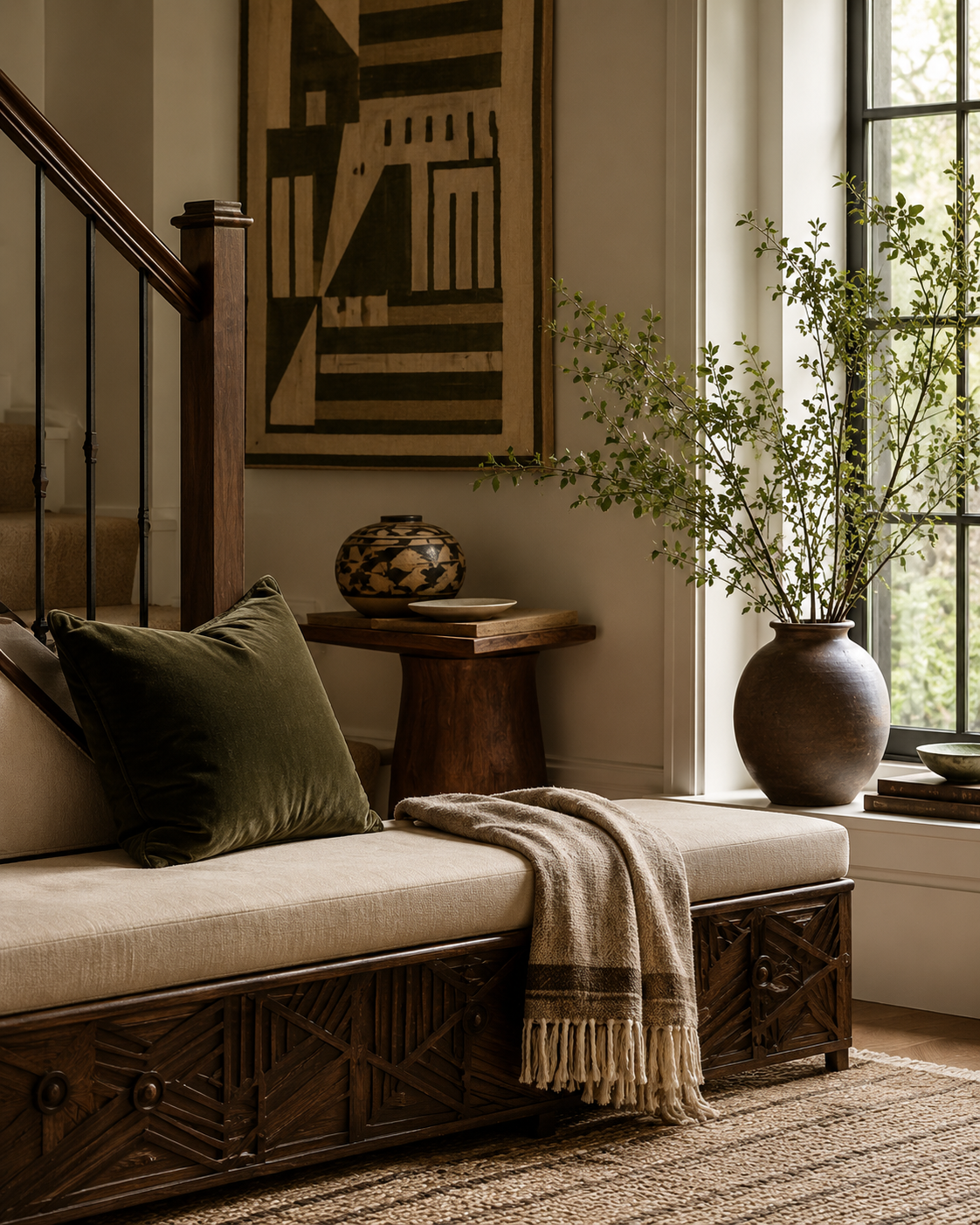
Sustainable interior design is not a temporary aesthetic or a checklist of products. It is a way of making decisions with greater attention to origin, durability, energy use, maintenance, and what will happen to an object at the end of its life. A beautiful home can be environmentally conscious without looking rustic, overly earnest, or driven by a single visual formula.
The most responsible choice is often the one that lasts: a well-made sofa that can be reupholstered, stone selected for its durability, vintage furniture already in circulation, or a layout designed to remain useful as a household changes. Sustainability and refinement meet in interiors that waste less because each decision is made with intention.
Choose Materials for Origin, Health, and Longevity
Reclaimed wood, rapidly renewable fibers, responsibly sourced timber, recycled metal, and natural textiles can reduce environmental impact while introducing character and texture. Organic cotton, linen, hemp, wool, and bamboo each have different performance qualities, so the right choice depends on use as much as origin.
Also consider finishes, adhesives, and indoor air quality. Low-VOC paints and thoughtfully specified materials can contribute to a healthier home. Certifications can be helpful, but durability, repairability, transportation, and the full life of a product deserve equal attention.
Reduce Energy Use Through Better Lighting and Planning
LED lighting uses less energy and lasts significantly longer than many traditional bulbs, but good lighting design begins before the fixture is selected. Preserving daylight, using task lighting where it is needed, and adding controls or dimmers can reduce unnecessary illumination while making rooms more comfortable.
Energy-efficient appliances, window treatments that moderate heat and glare, and layouts that support natural ventilation can also improve performance. These choices are most effective when integrated early rather than treated as technical additions after the design is complete.
Embrace Vintage, Reuse, and Circular Design
Vintage and antique furnishings carry history, reduce demand for new production, and often bring craftsmanship that is difficult to replicate. Existing pieces can be refinished, reupholstered, resized, or adapted to serve a new purpose without losing their character.
Upcycling is strongest when the result feels intentional. A restored cabinet, re-covered chair, or salvaged stone remnant should belong naturally to the composition rather than read as a compromise. Working with skilled craftspeople can extend the life of pieces while making them more personal.
Design with Fewer, Better Decisions
A sustainable interior does not require filling a home with products marketed as eco-friendly. Start by asking whether an item is needed, whether it will perform well, whether it can be repaired, and whether it will still feel relevant years from now.
At Ikorodu Interiors, we value materials with integrity, handcrafted objects, vintage pieces, and homes that can evolve without constant replacement. The result is not only more responsible; it is often more distinctive, comfortable, and deeply connected to its owners.