
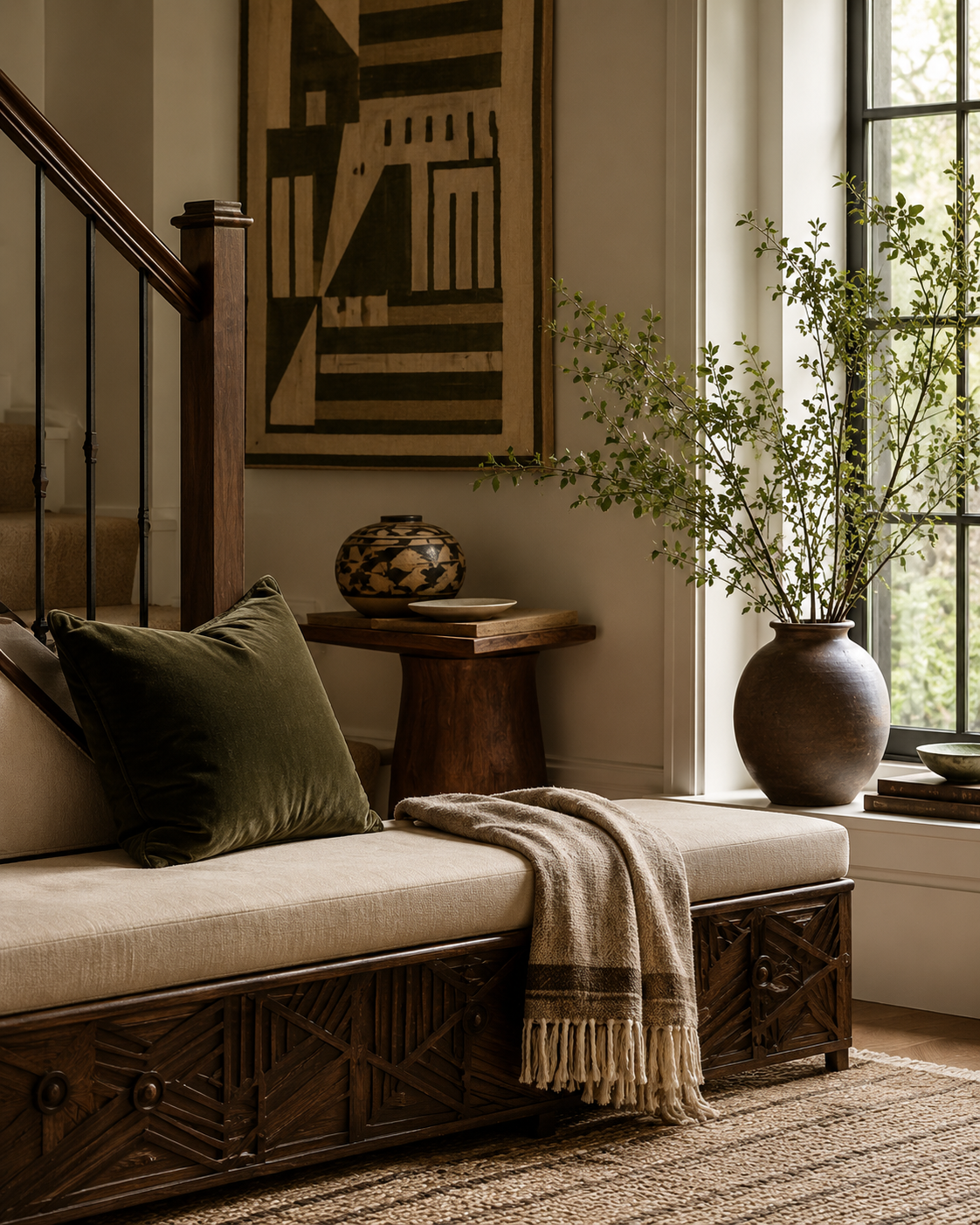
Biophilic design creates a more meaningful connection between the home and the natural world. It is not simply a matter of adding a few plants. The approach considers how daylight, views, natural materials, organic forms, texture, air, and greenery can work together to make an interior feel calmer, healthier, and more alive.
In a refined home, biophilic design is most successful when nature is integrated into the architecture and material palette rather than treated as decoration. A beautifully veined stone, richly grained wood, woven fiber, filtered view of the landscape, or carefully placed tree can bring warmth and movement while preserving a composed, elevated atmosphere.
The goal is balance: vibrant without becoming crowded, organic without feeling rustic, and restorative without sacrificing sophistication. Thoughtful layers of greenery, texture, and light can transform the experience of a room while supporting everyday well-being.
Indoor Plants and Greenery
Plants introduce color, movement, texture, and an immediate sense of life. A large tree or sculptural plant can serve as a focal point in a living room, entry, or sunlit corner, while smaller groupings can soften shelves, consoles, and workspaces.
Scale and placement matter. One generously proportioned plant often feels more intentional than many unrelated small pots. The vessel should also belong to the room: hand-thrown clay, aged metal, woven fiber, stone, or a restrained ceramic finish can connect the greenery to the surrounding palette.
Choose plants for the light, humidity, maintenance, and circulation conditions of the actual space. Biophilic design should improve daily life, not create a collection that is difficult to sustain. Where living plants are impractical, preserved botanicals, cut branches, or a clear view toward outdoor planting can provide a quieter connection to nature.
Natural Materials for Refined Interiors
Wood, stone, clay, linen, wool, rattan, jute, and other woven fibers bring the irregularity and tactile depth found in nature indoors. Their grain, veining, patina, and hand-finished surfaces keep a room from feeling flat or overly manufactured.
Material quality is most apparent in the details: the edge of a stone slab, the joinery of a wood cabinet, the weave of a textile, or the subtle variation in handmade tile. Layering smooth and textured surfaces creates richness while allowing a restrained palette to remain visually interesting.
Natural does not have to mean informal. Dark hardwood, honed stone, tailored linen, sculptural ceramics, and finely woven rugs can feel polished and architectural. The most compelling combinations respond to the home’s character and are selected for durability as well as beauty.
Maximizing Natural Light and Openness
Daylight changes throughout the day, revealing color and texture in ways artificial light cannot fully replicate. Window treatments that filter rather than block light, reflective surfaces placed with care, and layouts that preserve sight lines can help natural illumination travel deeper into a room.
Mirrors can amplify light and views when they reflect something worth seeing—a garden, artwork, an architectural detail, or a beautiful material. Their placement should feel purposeful rather than purely corrective. Pale or softly reflective finishes can also extend brightness without making the room feel stark.
Where architecture permits, larger windows, skylights, glazed doors, and indoor-outdoor transitions strengthen the relationship to the landscape. In apartments or rooms with fewer openings, keeping window areas visually clear and placing furniture to appreciate the available view can make a meaningful difference.
Subtle Nature-Inspired Accents
A connection to nature can be expressed without filling a room with greenery. Botanical artwork, landscape photography, organic silhouettes, stone accessories, water features, and patterns derived from leaves or branches can introduce the idea more subtly.
The strongest accents usually share a relationship with the room’s colors and materials. A handwoven textile might echo the rhythm of grasses; a sculptural light might reference a branch; a vessel might repeat the warm clay tone already present in the flooring or art.
Sound and scent can also shape the experience. The quiet movement of water, natural ventilation, or a restrained botanical fragrance can make a room feel restorative without adding visual clutter.
Creating a Restorative, Elevated Home
Biophilic interiors work because they engage more than appearance. They support a sense of calm through natural light, tactile materials, visual variation, and reminders of seasonal change. These qualities can be especially valuable in urban homes, where daily contact with nature may be limited.
At Ikorodu Interiors, we approach these elements as part of the whole composition. Greenery should relate to the architecture, materials should support both beauty and function, and nature-inspired details should deepen the client’s story rather than follow a formula.
When every layer is chosen with intention, the result feels effortless: a home that is elegant, personal, and restorative, with a connection to nature that can be felt as much as seen.