Trends are useful when they reveal a broader shift in how people want to live. In 2025, that shift is unmistakably toward interiors with greater warmth, tactility, comfort, and personality. Homes are moving away from cold perfection and toward rooms that feel layered, collected, and connected to the people who inhabit them.
That does not mean every current color, material, or furniture shape belongs in every home. The most successful interiors translate a trend through the architecture, the client’s taste, and the realities of daily life. These are the 2025 interior design trends we believe have genuine staying power—and the familiar looks beginning to lose their hold.
Colors Are Becoming Warmer and More Expressive
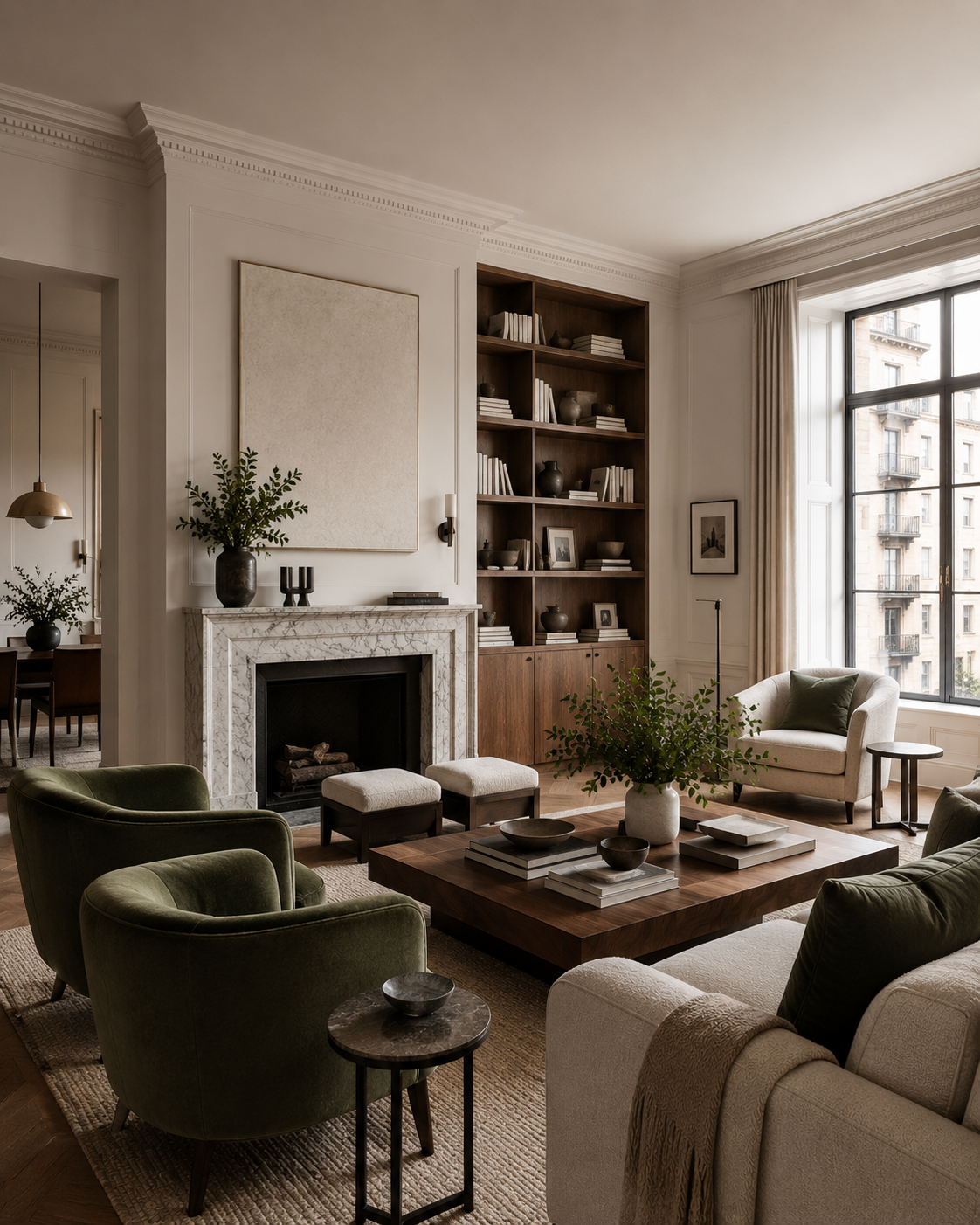
Terracotta, clay, ochre, warm beige, and softened brown are replacing the cooler neutrals that dominated much of the previous decade. These earth tones create a comforting backdrop and pair naturally with wood, stone, aged metal, and woven fibers. Muted greens and atmospheric blues remain important because they introduce color while retaining a sense of calm.
Deeper accents—including navy, mustard, aubergine, and coral—are also returning in more deliberate applications. A saturated study, painted millwork, upholstered chair, or expressive artwork can give a room identity without requiring every surface to compete. The most enduring palettes balance quieter foundational colors with moments of conviction.
Natural Materials and Tactile Surfaces Lead
Reclaimed and richly grained woods bring warmth, history, and visual variation. Honed marble, travertine, granite, plaster, and handmade tile offer depth that flat synthetic finishes struggle to reproduce. Bouclé, velvet, mohair, raw linen, and wool add softness while rewarding closer inspection.
The appeal is not simply visual. Materials with texture and natural variation make a room feel less manufactured and often age more gracefully. Selecting them for durability, maintenance, and context—not only appearance—turns a current preference into a long-term investment.
Furniture Is Softer, Curvier, and More Adaptable
Curved sofas, rounded tables, and organic silhouettes continue to soften rigid architecture and encourage movement through a room. Modular seating is equally relevant because it can adapt to entertaining, family life, and changing floor plans.
The caution is proportion. Too many rounded forms can make an interior feel themed, while an oversized modular sofa can quickly overwhelm circulation. Curves work best as part of a broader composition, balanced by cleaner lines, negative space, and furniture scaled to the room.
What Is Fading—and What to Choose Instead
Ultra-minimal interiors that prioritize emptiness over comfort are giving way to more expressive rooms. Overly themed spaces, matching furniture sets, and excessive chrome or glass are also losing appeal because they leave little room for personal history or material depth.
In their place, choose a thoughtful mix of periods, finishes, and meaningful objects. Trends can refresh a home, but they should not erase its identity. A strong interior can welcome a new color or silhouette while remaining grounded in craftsmanship, comfort, and pieces that matter to the people who live there.